A hopeful story from Darjeeling
This is our first blog post in a long time. We’ve been busy traveling and opening our dream brick and mortar shop. This is also our first ever blogpost in English. We’ve received a lovely text from one of our newest producers, and we wanted to present it in Sonia’s own words.
First a little background and context: As many of you may know, Darjeeling is a famous tea producing region, prized by tea lovers around the world for producing “the champagne of tea”. It is true that there are some amazing teas to come out of this region due to rich soil at the foothills of the Himalayas. But it is also true that the region is struggling with a number of issues increasing in severity every single year. There is a complex web of reasons behind these issues, and from our point of view, many tea drinkers in Scandinavia are unaware of the complexity, so we’ll attempt to break this down in a short explanation.
The explanation will differ depending on who you ask. Some local experts in Darjeeling will tell you that cheaper tea from Nepal is to blame for the decline in the Darjeeling market. Others will say yield is low because the plants are old (typically 70-100 years) and need to be replaced. While it is true that older tea bushes have lower yields, in other tea producing countries with a longer production history older plants are highly valuable and fetch higher prices due to their flavour complexity because of deeper root systems. Age gives the tea plants deeper access to nutrients and water and they can withstand pests, drought and floods much better. However, this is not usually the case for Darjeeling because historically the use of pesticides and chemical fertilizer has been very high and there is a lot of deforestation. This results in poor soil quality, frail root systems and erosion, so that the plants haven’t truly been benefiting from their old age. Even though almost 60% of the total production has moved over to organic farming in the last few years is it going to take many more years to revitalise the health of the soil, the local ecosystems and the root systems.
Our perspective is that if this shift from heavy pesticide usage had taken place a little sooner the strain on the tea plants and the local community might not have been as severe as it is today. Of course this is only a small part of the possible solution because there are also a series of unfortunate events that have added to the economic stress. These were unavoidable, but had the plants been stronger Darjeeling might have been better prepared in times of crises. For those who are curious some of the main crises over the past 10 years were a 104-day strike in 2017 leading ruction to halt, then of course the Covid pandemic and lastly increasingly unstable weather and a series of drought. All of this has added to the rapidly declining yield in the district, plummeting from 14.49 million kilos in 1990 to 5.19 million kilos today. As you can see, the decrease in yield started long before both the historical strike, and the pandemic which has us wondering how much is due to the health of tea plants. It is a bit of an impossible situation because how can you focus on regenerating the soil if you are under major economical stress and a shortage of labor? During our time both in Darjeeling and Assam last spring we learned that for a long time the issues were postponed with “medicine” and quick fixes (more pesticides and more fertilizer), just adding to the issues in a long term perspective. And, in addition, the tea trade isn’t fair, and prices have been on a downward trajectory alongside the decrease in yield, further adding to the economic instability not only in Darjeeling, but in many tea producing regions.
All of this has led us to be very wary of buying tea in Darjeeling. As a very small business we didn’t know how to navigate this complex district and we didn’t know where to begin to search for gardens who were working towards a change. So until spring 2025 we have just stayed away, but on our recent souring trip we traveled through Darjeeling on our way from Nepal to Assam and we had an opening in our schedule. We searched the map for tea gardens and researched each one to see if we could find someone exciting who had time to meet us on short notice. That’s when we were really lucky and found Sonia at Nuxalbari in the lower Darjeeling region. Nuxalbari was right on our path, and they graciously let us stay at the garden for a couple of days. This is our first time showing up at a garden on such short notice, as for most of our trips we already have a relationship with the producer before we travel. We were amazed by all the projects the Nuxalbari team is initiating for the health of their own garden, their workers and the local wildlife, and what is maybe the most exciting part of it all is how quickly they have been able to turn things around. We learned so much and filled us with hope for a better future. So here is Sonia’s story in her own words and pictures. We hope you appreciate it as much as we do and we hope to read more stories like this from Darjeeling in the coming years.
From Crisis to Transformation: Our Path to Regenerative Joy
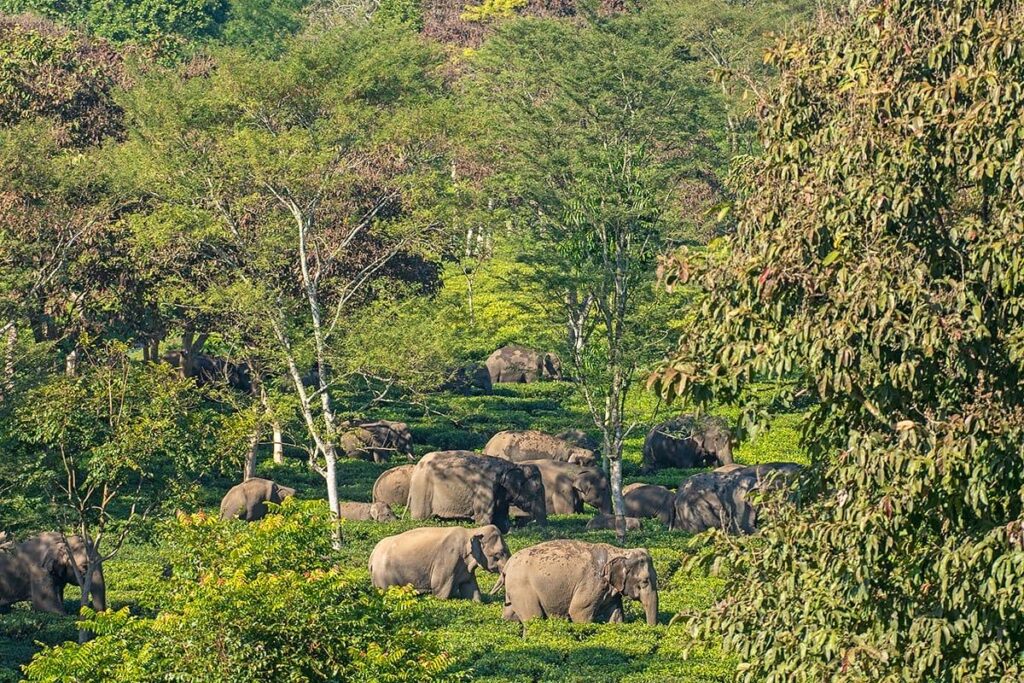
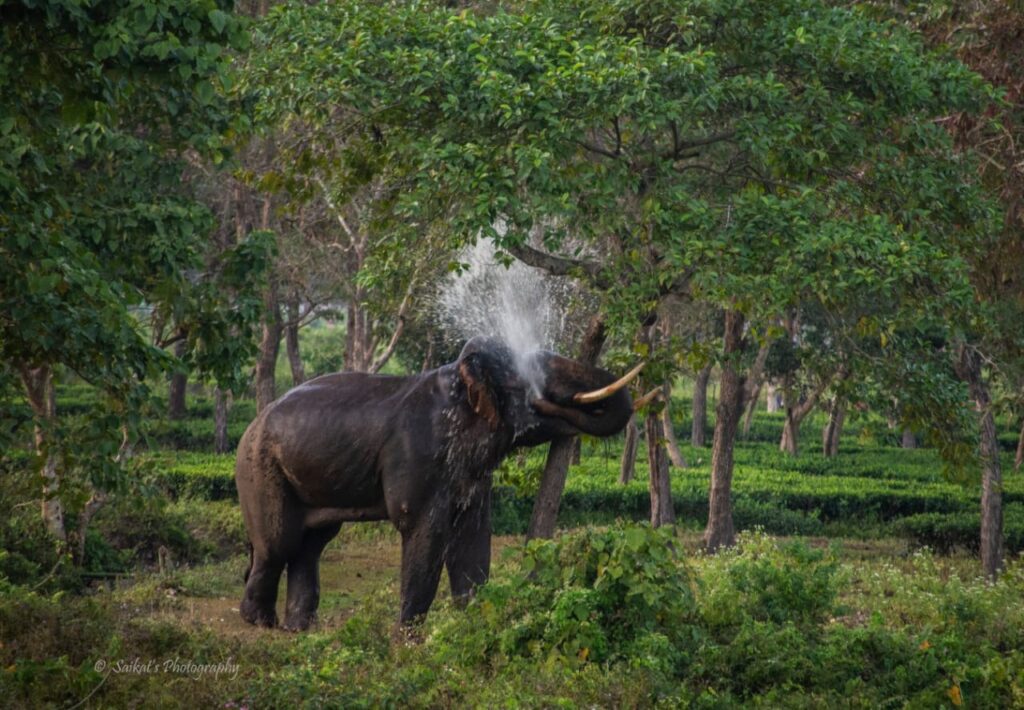
In 2018, when I took full control of Nuxalbari Tea Estate, everything aligned. We delivered five straight profitable years, won the World Black Tea Grand Gold Prize at Beijing in 2022, and I was honoured with the Presidential Award (Nari Shakti Puraskar) for blending wildlife conservation with tea cultivation—creating India’s first Elephant-Friendly certified estate.
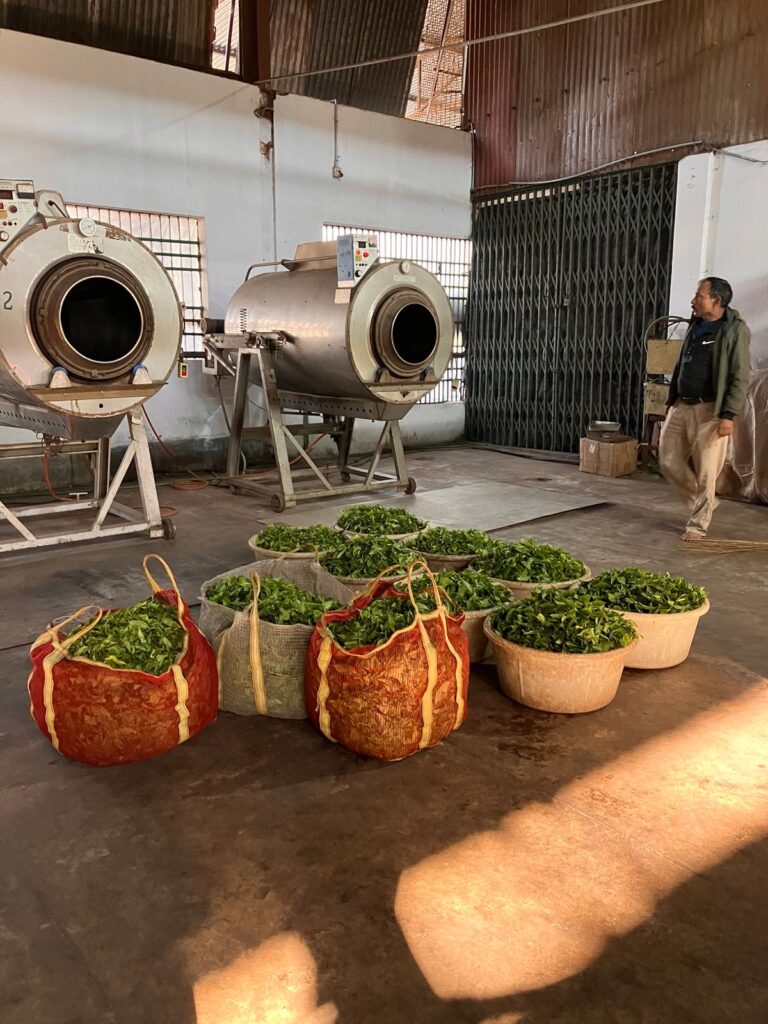
Ambitious plans unfolded: we invested and built a well-designed, spanking new factory. I thought we’d never look back.
Then came the spring of 2023. A brutal drought, relentless pest attacks, and a mysterious crop collapse. By September, the diagnosis was clear: soil-borne diseases—Fusarium, grey blight, black rot. We followed every expert recommendation, but nothing stemmed the tide. By summer 2024, we’d lost over half our harvest.
The turning point? I noticed that the 60 acres already converted to organic stood resilient—untouched by the devastation ravaging conventional sections.
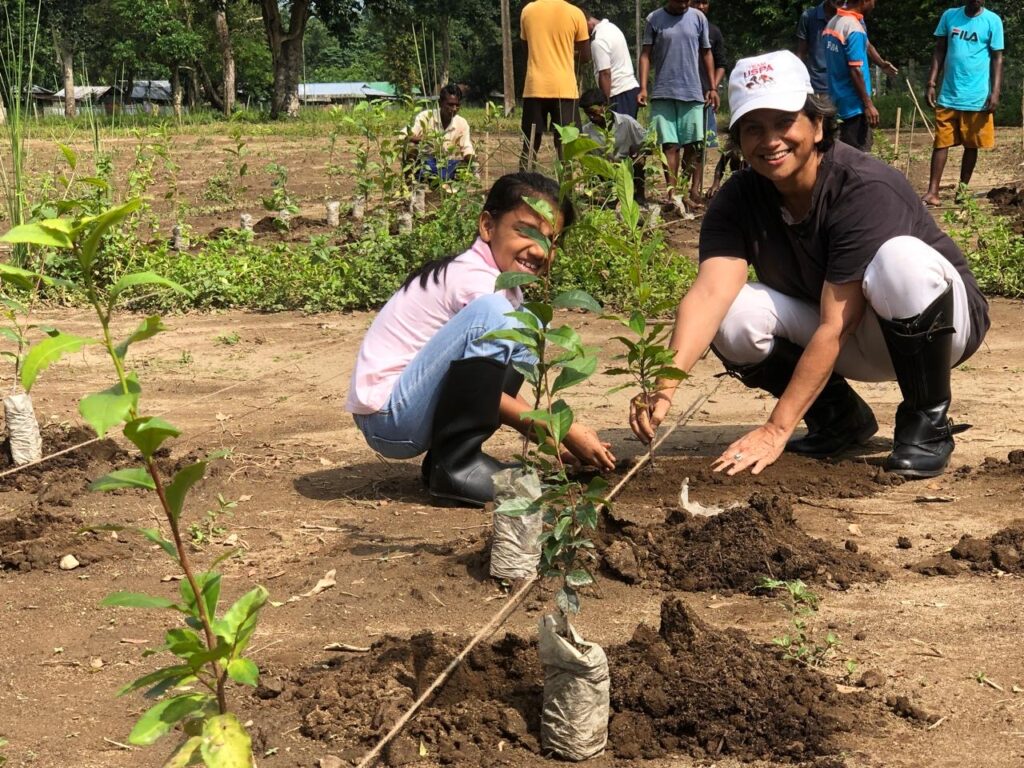
That observation changed everything. I dove deep into soil science with Dr. Elaine Ingham in the US, explored Korean Natural Farming, and revisited Biodynamic principles I’d studied years earlier. The path forward became obvious: convert all 1200 acres to Regenerative Organic and Biodynamic farming.
By April 2025, we eliminated pesticides, weedicides, and chemical fertilizers completely. We crafted our own biofertilizers and brews, experimented boldly, stumbled, fell, learned, and rose again. Life, after all, is about falling and getting back up.
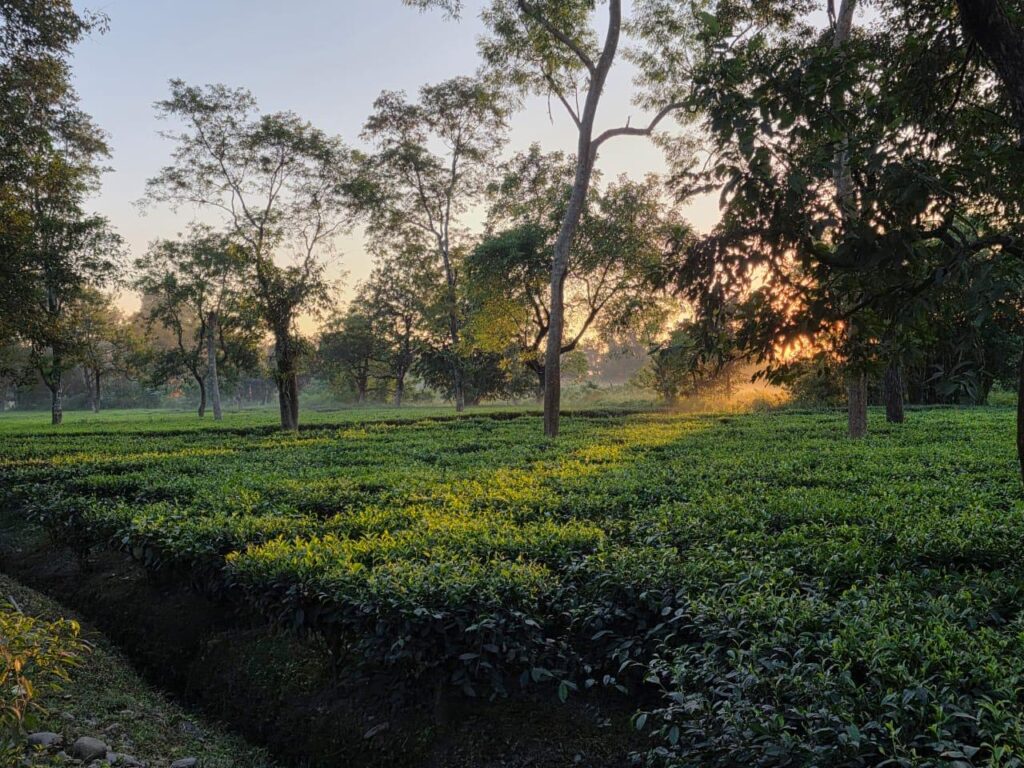
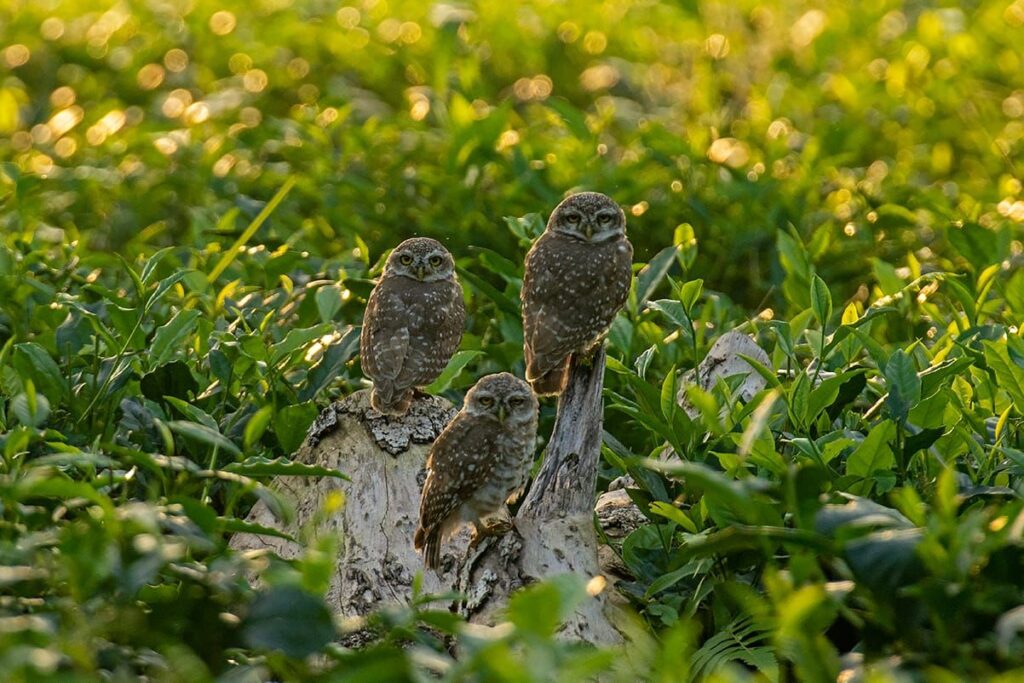
The rewards? An explosion of biodiversity—wild flowers, butterflies, fireflies, birds in profusion, jackals, leopards and of course our beloved elephant herds. Fewer visits to our free clinic by our workers. And for you: nutrient-dense teas alive with a thriving soil microbiome, healing your gut health as we heal our corner of the planet.
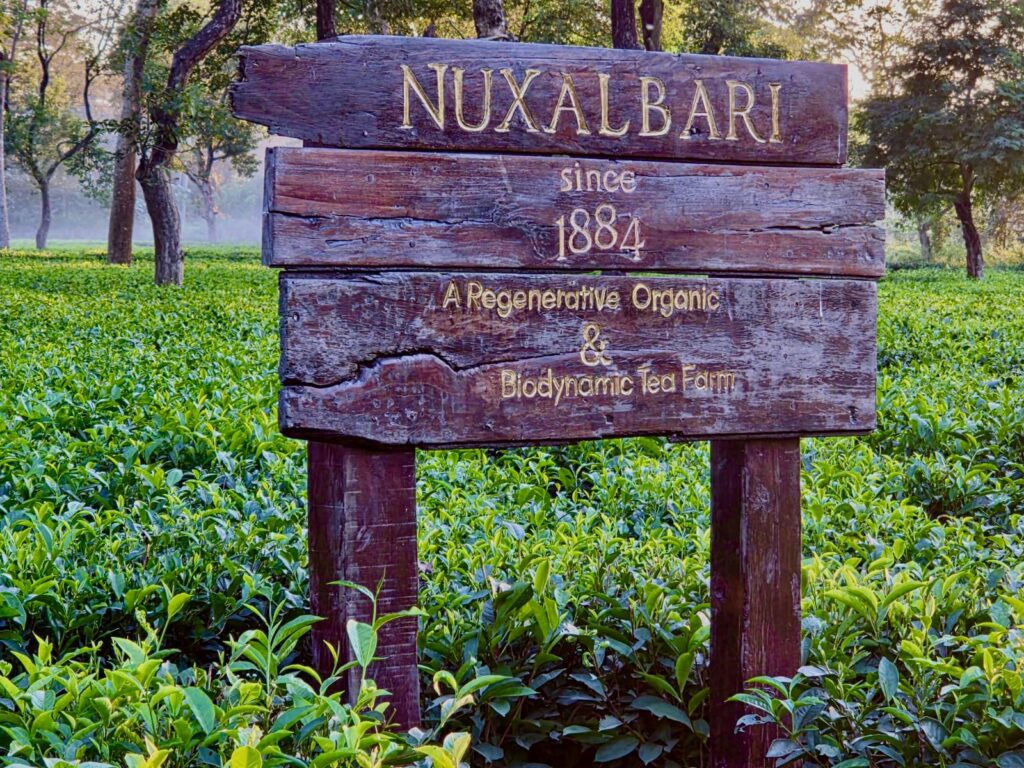
Today, Nuxalbari is India’s pioneering large-scale Regenerative Organic & Biodynamic tea farm. We grow better teas, healthier land, happier people and wildlife—and pure joy in every cup.
We Grow Joy—let’s grow it together!
All good wishes,
Sonia Jabbar
a 5th Generation Tea Planter
If you want to support Sonia, please try our latest tea from Nuxalbari so that we can buy more from this garden in the future!